|
Dealer: West |
|
|||||||||||||||||||||||||||||||
|

|
|
||||||||||||||||||||||||||||||
|
Contract: 6NT |
Double dummy analyser: makeable contracts
|
|||||||||||||||||||||||||||||||
| West | North | East | South |
|---|---|---|---|
1 * * |
Pass | 1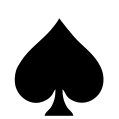 |
Pass |
| 2 |
Pass | 3 |
Pass |
| 3NT | Pass | 4 |
Pass |
| 4 |
Pass | 5 |
Pass |
| 6NT | End | ||
|
* Precision
|
|||
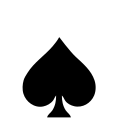
Why not find out whether the diamonds are breaking first? It's a no cost play - unless you are very unlucky and North has five diamonds along with four spades, in which case there is a potential  /
/ squeeze. When North does indeed prove to have five diamonds then it is better odds to play for South to hold
  K on the "vacant slots" theory. In essence, there are more unproven places left in South's hand and therefore the heart finesse has become much better than a 50/50 good bet.
When Rowlands found that the diamonds were unkind only then did he turn to the clubs. South won A and immediately switched to a heart but declarer played with the odds and finessed Q to land his slam.
Previous page